Everything a devotee needs before booking the Kaal Sarp Dosh puja — the shastric basis, the three-day ritual sequence, priest selection, and honest costs.
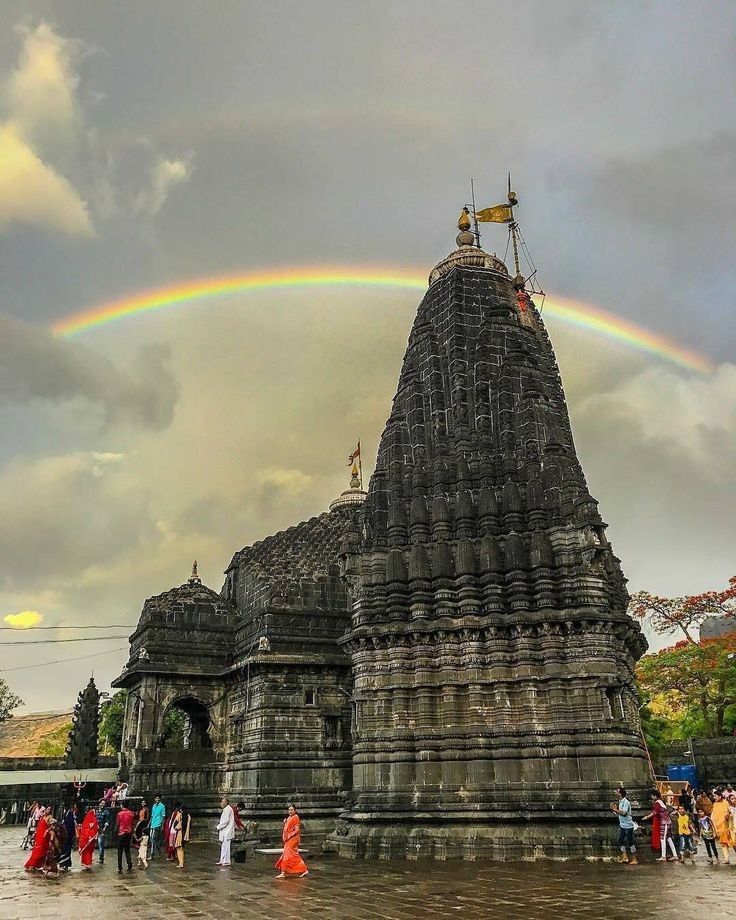
Trimbakeshwar is one of only two temples in India (along with Kalahasti in Andhra Pradesh) where the Kaal Sarp Dosh Nivaran puja is performed with full shastric sanction. If you have been diagnosed with Kaal Sarp Dosh in your natal chart, or a Vedic astrologer has recommended the puja, this guide walks you through what actually happens on the ground — the shastric basis, the priest ecosystem, the exact ritual sequence across three days, and the realistic financial and time commitment.
One caveat first: this article describes the classical ritual as authorised by the Trimbakeshwar Devasthan and the Panchang tradition. It does not attempt to establish whether Kaal Sarp Dosh is a valid astrological concept in modern academic astrology — that is a debate outside the scope of a pilgrimage guide. Devotees who choose to undertake the puja do so on the basis of classical Vedic astrology and their own faith tradition.
What is Kaal Sarp Dosh?
Kaal Sarp Dosh is a specific astrological condition where all seven visible planets (Sun, Moon, Mars, Mercury, Jupiter, Venus, Saturn) are placed on one side of the Rahu-Ketu axis in the natal chart. There are twelve named variants — Anant, Kulik, Vasuki, Shankhpal, Padma, Mahapadma, Takshak, Karkotak, Shankhachud, Ghatak, Vishdhar, and Sheshnag — each triggering different life obstacles in classical astrological literature. The variant depends on which houses Rahu and Ketu occupy.
The prescribed remedy is not a single ritual but a three-day sequence combining Narayan Nagbali (an atonement for departed souls and ancestral snake curses) with the specific Kaal Sarp Dosh puja itself. Both rituals must be performed at a shastrically authorised location — Trimbakeshwar is the primary and best-known such site in India.
The Three-Day Ritual Sequence
Day 1 is the Narayan Nagbali proper. It starts before sunrise at the Kushavarta Kund with a purificatory bath, followed by the sankalp (formal declaration of intent with your name, gotra, and family lineage). Effigies of wheat flour representing departed souls and serpents are prepared over the next two hours. The morning is spent in Vedic recitation of the Rudra Ashtadhyayi and specific Nag Puran verses; the afternoon in the actual bali offerings on the banks of the Godavari.
Day 2 is the Kaal Sarp Puja and Tripindi Shraddh — a shraddha ceremony for three generations of paternal and maternal ancestors, again performed at the ghat. This is emotionally the heaviest day for most pilgrims — the priest recites the names of your ancestors going back three generations, requiring you to have brought this information from your family. If you do not know your great-grandparents' names, the puja is considered incomplete.
Day 3 concludes with the Prayaschit ritual, the specific Kaal Sarp Yantra puja for your particular variant, and the Deepdaan at dusk (floating lit lamps on the Godavari). Only when all three days are complete is the puja considered valid. Shortcuts advertised as "one-day Kaal Sarp puja" by some Nashik tour operators are shastrically invalid.
Priest Selection and Cost
Only registered Trimbak priests are shastrically qualified. The official list of authorised priests is maintained by the temple trust at trimbakeshwar.gov.in — use this list and avoid touts who solicit at the Nashik railway station or bus stand. Expect dakshina in the range of ₹6,000 to ₹25,000 for the full three-day ceremony, depending on family size and the priest's experience. Larger packages that bundle stay and food are quoted at ₹18,000 to ₹35,000.
Reject any priest who quotes a price without asking for your gotra, your pravar, and your family history — the ritual is customised and a priest who does not need those details is not performing it authentically. Also reject any priest who cannot show his shastri or purohit certification from the temple trust. Bargaining is culturally acceptable but do not push below ₹6,000 for a full three-day ceremony; a priest working below this rate is almost certainly cutting corners.
Practical Preparation
Book the puja at least 15 days in advance; certain days (particularly Amavasya, Naga Panchami, and the Kartik Shukla Trayodashi) are heavily booked and priests refuse walk-ins on these auspicious dates. Fast on Day 1 morning (only fruits and water). Wear only cotton unstitched dhoti/saree during the ritual; leather is prohibited throughout the three days. Menstruating women should reschedule the puja — this rule is enforced by all Trimbak priests and cannot be worked around.
Accommodation is best arranged directly with a temple-approved dharamshala or a mid-range hotel in Trimbak town (there are several within a five-minute walk of the temple). Nashik city hotels are 30 kilometres away and require a daily commute that will exhaust you before Day 3. Book close to the temple; the extra ₹500-800 per night is worth it.
What Devotees Usually Feel Afterwards
Devotees typically describe an immediate sense of emotional release after Day 2, when the ancestral tripindi is completed. Whether the astrological Dosh is technically "removed" is a matter of faith, but the psychological closure of formally honouring ancestors and offering restitution for family lineage transgressions is measurable in every account we have collected. Do not expect a specific external life change on a fixed timeline — the classical texts describe results unfolding over one to three years, correlated with the natural transit cycles of Rahu and Ketu.
The most reliable outcome, reported by nearly every pilgrim who completes the full three-day ritual, is a shift in family dynamics — long-standing estrangements often resolve, family gatherings become easier, and inherited emotional patterns become more visible and workable. Whether this is astrological or psychological is again outside the scope of a pilgrimage guide, but the pattern is consistent enough that it is worth mentioning explicitly.