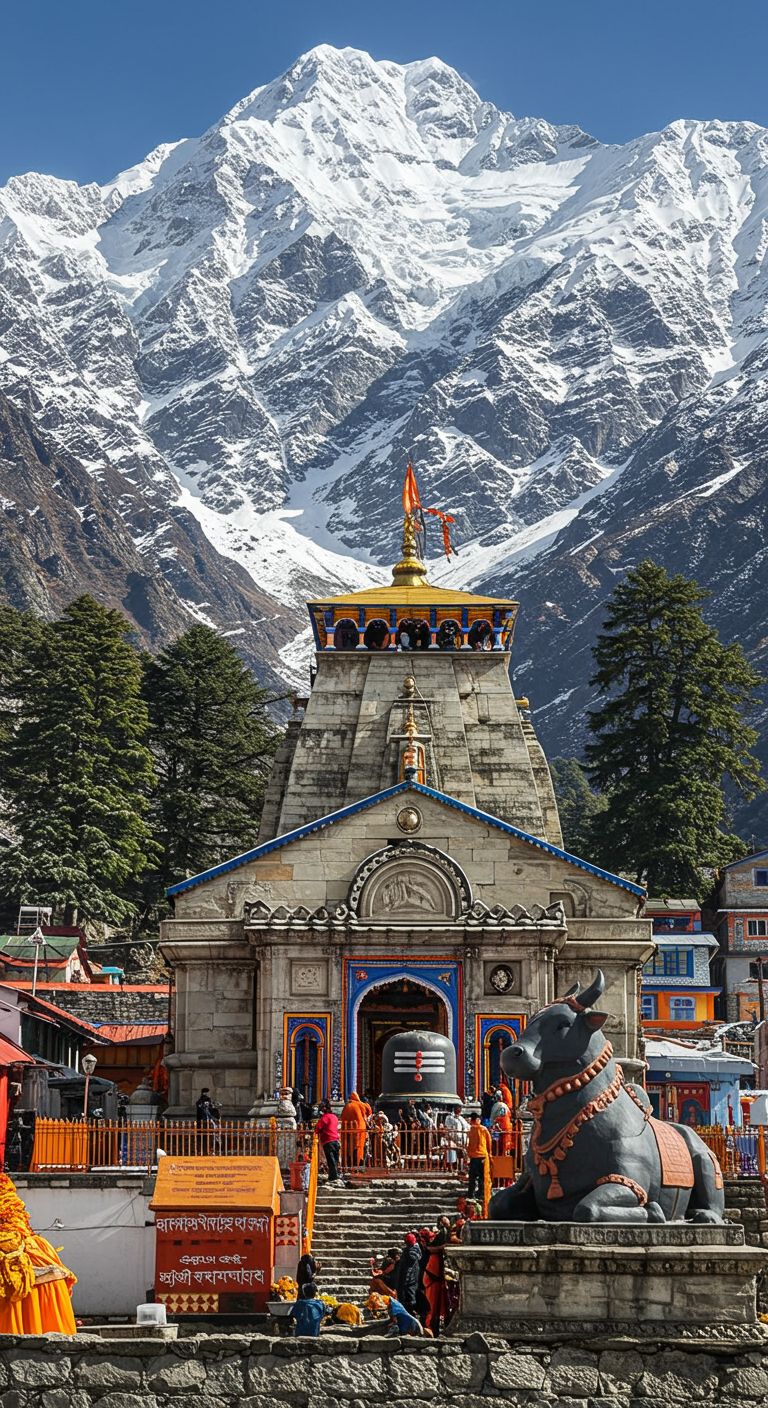
Kedarnath Jyotirlinga Temple
Kedarnath Jyotirlinga Temple in Rudraprayag, Uttarakhand — one of the twelve most sacred Shiva shrines in India, mentioned in the Shiva Purana.
About Kedarnath Jyotirlinga Temple
Located in the majestic Himalayas at an altitude of 3,583 meters. It is the highest among all 12 Jyotirlingas and part of the sacred Char Dham pilgrimage.
Kedarnath Temple Mythology & Legend
The Pandavas sought Lord Shiva's forgiveness after the Mahabharata war. Shiva took the form of a bull, and when Bhima tried to catch him, he went underground leaving his hump on the surface, which became the Kedarnath Jyotirlinga.
History of Kedarnath Temple
The temple is believed to be over 1,000 years old, built by Adi Shankaracharya. The structure is made of massive stone slabs and has withstood many natural calamities including the 2013 Uttarakhand floods.
Kedarnath Darshan Timings & Rituals
- Morning abhishekam
- Maha Aarti
- Bhairav worship (mandatory after Kedarnath darshan)
- Seasonal opening and closing ceremonies
How to Reach Kedarnath — Stay, Food & Travel Guide
Hotels & Accommodation Near Kedarnath
- Government and private dharamshalas in Kedarnath
- Tent accommodation during season
- Hotels in Gaurikund (16 km trek away)
- Accommodation in Guptkashi (30 km from Gaurikund)
Booking Tip: Visit platforms like MakeMyTrip, Booking.com, or Goibibo for online reservations.
Quick Information
Spiritual Significance of Kedarnath
Discover the ancient Vedic importance, Puranic legends, and astrological remedies associated with the sacred Kedarnath Jyotirlinga.
Associated Kaal Sarp Dosh
Mahapadam Kaal Sarp Dosh
Visiting this Jyotirlinga is traditionally prescribed as a powerful remedy for those born under or afflicted by this specific Kaal Sarp Dosh.
Vedic Importance & Puranic Legends
The highest Jyotirlinga. The Pandavas sought Shiva here to cleanse the sin of fraternal killing. Shiva disguised himself as a bull; its hump remained as a triangular rock formation.
Why You Should Visit
Spiritual & Material Benefits
For absolute purification, erasing massive karmic debts, and spiritual enlightenment. The physical endurance required teaches detachment from the material body and prompts profound inner growth.
The Complete Guide to Kedarnath Jyotirlinga
Everything a pilgrim needs — a millennium of history, the specifics of the sanctum's architecture, the exact darshan procedure, the annual festival calendar, and practical tips born from experience on the ground.
A Thousand Years of History
Kedarnath, at an altitude of 3,583 metres in the Garhwal Himalayas, is the highest of the twelve Jyotirlingas and one of the Char Dhams. Mahabharata tradition holds that after the Kurukshetra war, the Pandavas came here seeking Lord Shiva to absolve the sin of fratricide; Shiva, unwilling to meet them, took the form of a bull (Nandi) and dived into the ground. Bhima seized the hump — which is worshipped as the natural stone lingam of Kedarnath — while the remaining parts of the bull emerged at four other locations across the Himalayas, forming the 'Panch Kedar' pilgrimage circuit (Tunganath, Rudranath, Madhyamaheshwar, and Kalpeshwar). Adi Shankaracharya, according to the Kedarkhand of the Skanda Purana, attained mahasamadhi behind the temple in 820 CE at the age of just 32; his samadhi shrine, badly damaged in the 2013 floods, has since been restored. The 2013 Uttarakhand flood devastated the town of Kedarnath but the sanctum survived — a massive glacial boulder called the 'Bhim Shila' rolled into position just behind the temple and diverted the debris flow.
Architecture & Design of the Sanctum
The temple is built entirely of massive interlocking grey granite slabs (each weighing several tons) in a distinctive north-Indian Kailashi style. It has no mortar; the stability comes purely from the interlocking geometry, a technique that has kept it standing for over a millennium in a highly seismic zone. The garbhagriha is a small unadorned chamber housing a rough, conical lingam that pilgrims traditionally embrace and anoint with ghee. A statue of Nandi guards the mandapa, and the outer walls are inscribed with medieval Devanagari pilgrimage records.
Step-by-Step Darshan Procedure
- 1Reach Sonprayag (last motorable point) by shared taxi from Rishikesh or Guptkashi.
- 2Register your Char Dham Yatra online at registrationandtouristcare.uk.gov.in before boarding the shuttle to Gaurikund.
- 3Choose between the 16-km trek, pony/palanquin, or a helicopter shuttle from Sersi/Guptkashi/Phata to Kedarnath helipad.
- 4Reach Kedarnath village and check into pre-booked GMVN or private accommodation before the darshan queue.
- 5Perform ghee abhishekam by embracing the lingam — Kedarnath is one of the few Jyotirlingas where physical touch is permitted.
- 6Attend the evening Shayan Aarti and view the illuminated temple with the Kedar Dome peak in the background.
Annual Festival Calendar
Temple Opening (Akshaya Tritiya)
The temple opens around late April or early May every year with the arrival of the palanquin of Lord Shiva from Ukhimath, the winter seat of the deity.
Temple Closing (Bhai Dooj)
The temple closes on Bhai Dooj (October-November); the deity is then carried in a Doli Yatra back to Ukhimath for the six-month winter closure.
Rakhi Purnima (Shravan Purnima)
A special Rudrabhishek is performed and pilgrims tie sacred threads within the sanctum.
Insider Tips for Pilgrims
- The temple is open only from May to November; check the exact opening date each year on the Badri-Kedar Temple Committee website.
- Acclimatise for at least one night at Guptkashi or Sitapur before ascending — the altitude change from Sonprayag (1830 m) to Kedarnath (3583 m) is significant.
- Carry cash — mobile signal, ATMs and card machines are unreliable above Sonprayag.
Essentials for Your Kedarnath Yatra
Curated puja items, spiritual books, and travel essentials for pilgrims visiting Kedarnath and other sacred Jyotirlinga temples. Delivered by Amazon India.
Rudraksha Mala
Original 108-bead prayer mala for daily japa
Puja Thali Set
Complete brass puja thali with all accessories
Shiva Purana
Sacred scripture of Lord Shiva in English
Brass Diya & Lamp
Traditional oil lamp for temple worship
Meditation Cushion
Zafu cushion for meditation & chanting
Pilgrimage Backpack
Durable 40L travel backpack for temple visits
Ethnic Wear
Traditional kurta, saree & salwar for pilgrims
Shiv Idols
Brass, marble & panchdhatu Shiva idols for puja
As an Amazon Associate, we earn from qualifying purchases — at no extra cost to you. Prices, availability, and product details are managed by Amazon.in.
Book Your Stay Near Kedarnath
Plan your pilgrimage to Kedarnath with our trusted hotel and travel partners. Compare deals and book directly with verified providers.
IndiGo Hotels
Premium hotel deals across India
Cleartrip
Flights, hotels & holiday packages
Booking.com
Worldwide hotels & accommodation
Agoda
Hotels & resorts at best prices
Disclosure: We may earn an affiliate commission when you book through these partners — at no extra cost to you. This helps us keep the Jyotirlinga guide free.
Kedarnath Jyotirlinga — Your Questions Answered
Practical, spiritual and travel questions asked most often by first-time pilgrims to Kedarnath.
What Pilgrims Say About Kedarnath
Be the first to share your darshan experience.
Explore Other Sacred Jyotirlingas
Continue your spiritual journey across India by visiting the other sacred Jyotirlinga shrines of Lord Shiva.