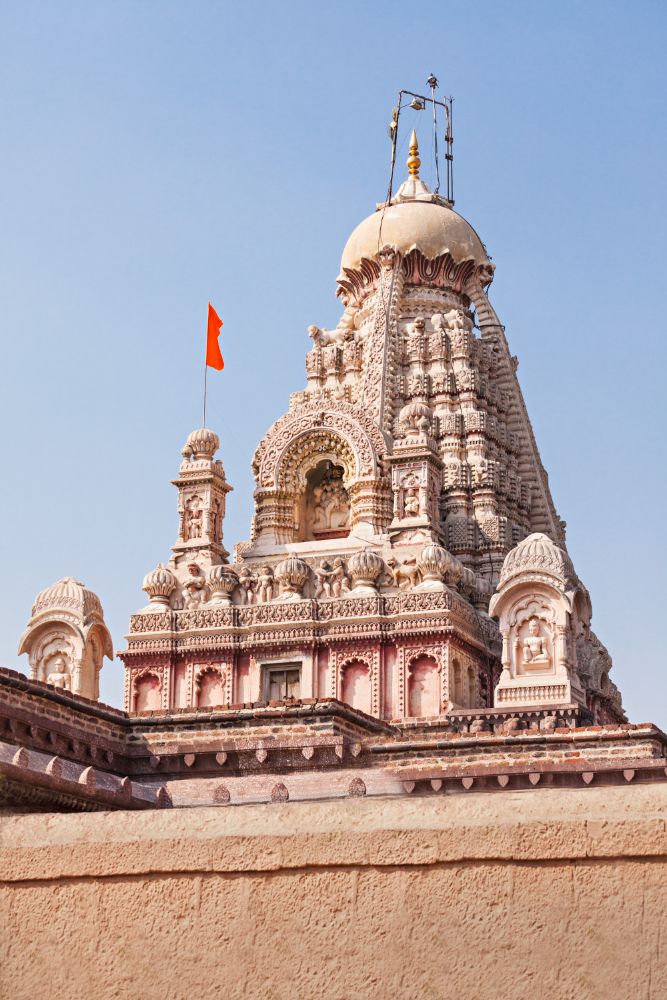
Grishneshwar Jyotirlinga Temple
Grishneshwar Jyotirlinga Temple in Aurangabad, Maharashtra — one of the twelve most sacred Shiva shrines in India, mentioned in the Shiva Purana.
About Grishneshwar Jyotirlinga Temple
Located near Ellora Caves in Maharashtra. It is the last or 12th Jyotirlinga on the list and is also called Ghushmeswara or Ghushmeshwar.
Grishneshwar Temple Mythology & Legend
A devoted woman named Kusuma worshipped Shiva daily. Her jealous co-wife killed Kusuma's son and threw him in a lake. When Kusuma prayed to Shiva, he restored her son and appeared as Ghrishneshwar Jyotirlinga.
History of Grishneshwar Temple
The temple was reconstructed by Maloji Raje Bhosale (grandfather of Chhatrapati Shivaji) and later by Ahilyabai Holkar in the 18th century. It features red rock architecture typical of the region.
Grishneshwar Darshan Timings & Rituals
- Abhishekam four times daily
- Rudrabhishek on Mondays and Pradosh
- Shravan month special pujas
- Evening aarti with oil lamps
How to Reach Grishneshwar — Stay, Food & Travel Guide
Hotels & Accommodation Near Grishneshwar
- Hotels near Ellora Caves
- Aurangabad city hotels (30 km)
- Guest houses near the temple
- Maharashtra Tourism resorts
Booking Tip: Visit platforms like MakeMyTrip, Booking.com, or Goibibo for online reservations.
Quick Information
Spiritual Significance of Grishneshwar
Discover the ancient Vedic importance, Puranic legends, and astrological remedies associated with the sacred Grishneshwar Jyotirlinga.
Associated Kaal Sarp Dosh
Seshnag Kaal Sarp Dosh
Visiting this Jyotirlinga is traditionally prescribed as a powerful remedy for those born under or afflicted by this specific Kaal Sarp Dosh.
Vedic Importance & Puranic Legends
The final Jyotirlinga. A devout woman named Ghushma consistently worshipped clay lingams even after her sister killed her son. Shiva, pleased by her devotion, restored her son and stayed permanently.
Why You Should Visit
Spiritual & Material Benefits
To restore lost happiness, overcome fertility challenges, and resolve profound grief. It teaches that unwavering consistency in your routines and duties compels divine grace to rebuild what was lost.
The Complete Guide to Grishneshwar Jyotirlinga
Everything a pilgrim needs — a millennium of history, the specifics of the sanctum's architecture, the exact darshan procedure, the annual festival calendar, and practical tips born from experience on the ground.
A Thousand Years of History
Grishneshwar (also spelled Ghushmeshwar or Grushneshwar) is the twelfth and final Jyotirlinga, located near the Ellora caves in Aurangabad district, Maharashtra. The Shiva Purana narrates the story of Ghushma, a pious woman married into a wealthy family in the Devagiri region. Ghushma daily made 101 clay lingams, worshipped them, and immersed them in a nearby lake — a ritual that pleased Shiva. Her jealous elder sister murdered Ghushma's newborn son and threw the body into the same lake, but the next morning, when Ghushma performed her regular ritual and immersed the clay lingams, her son emerged alive from the water. Ghushma requested Shiva to remain permanently on the spot; the Jyotirlinga is named after her. The current temple was rebuilt in the eighteenth century by Rani Ahilyabai Holkar of Indore, who was responsible for the reconstruction of several other Jyotirlingas as well (Kashi Vishwanath, Somnath, Vaidyanath). The temple lies just 1 km from the world-famous Ellora Caves (UNESCO World Heritage Site).
Architecture & Design of the Sanctum
Rani Ahilyabai's temple is a fine specimen of eighteenth-century Maratha revival architecture. Built in red basalt with a graceful five-tiered shikhara rising 45 feet, the temple carries intricately carved dashavatara panels and Mother Goddess iconography on the exterior walls. The sabha-mandapa is supported by 24 pillars, each with different Puranic scenes. The garbhagriha houses a jet-black basalt lingam set in a broad silver yoni-peetha, and unusually, male devotees are traditionally required to enter the sanctum bare-chested — a custom preserved from the eighteenth-century consecration.
Step-by-Step Darshan Procedure
- 1Enter through the main gate — no ticketing is needed for regular darshan.
- 2Male devotees traditionally remove upper garments before entering the sanctum.
- 3Deposit footwear, phones and leather items at the free counter.
- 4Offer bilva leaves, milk and Bhaang (traditional cannabis paste offering) at the abhishek counter.
- 5Perform pradakshina of the sanctum three times.
- 6Combine the visit with the adjacent Ellora Caves (1 km) and Daulatabad Fort (13 km).
Annual Festival Calendar
Maha Shivratri
A four-day festival with continuous Rudra-abhishek and evening cultural programmes in the temple courtyard.
Shravan Somvar
Every Monday of Shravan sees the temple courtyard full of Ganga jal-carrying pilgrims from across Maharashtra.
Kartik Ekadashi
The final day of the Chaturmas fast is celebrated with a special processional yatra of the deity through the surrounding villages.
Insider Tips for Pilgrims
- Male devotees should carry a spare kurta they don't mind removing at the sanctum entrance.
- The 1 km walk to the Ellora Caves from the temple takes about 15 minutes — a perfect combined pilgrimage and heritage tour.
- The temple town of Verul (Ellora) has limited hotels; base yourself in Aurangabad (30 km) for wider accommodation choice.
Essentials for Your Grishneshwar Yatra
Curated puja items, spiritual books, and travel essentials for pilgrims visiting Grishneshwar and other sacred Jyotirlinga temples. Delivered by Amazon India.
Rudraksha Mala
Original 108-bead prayer mala for daily japa
Puja Thali Set
Complete brass puja thali with all accessories
Shiva Purana
Sacred scripture of Lord Shiva in English
Brass Diya & Lamp
Traditional oil lamp for temple worship
Meditation Cushion
Zafu cushion for meditation & chanting
Pilgrimage Backpack
Durable 40L travel backpack for temple visits
Ethnic Wear
Traditional kurta, saree & salwar for pilgrims
Shiv Idols
Brass, marble & panchdhatu Shiva idols for puja
As an Amazon Associate, we earn from qualifying purchases — at no extra cost to you. Prices, availability, and product details are managed by Amazon.in.
Book Your Stay Near Grishneshwar
Plan your pilgrimage to Grishneshwar with our trusted hotel and travel partners. Compare deals and book directly with verified providers.
IndiGo Hotels
Premium hotel deals across India
Cleartrip
Flights, hotels & holiday packages
Booking.com
Worldwide hotels & accommodation
Agoda
Hotels & resorts at best prices
Disclosure: We may earn an affiliate commission when you book through these partners — at no extra cost to you. This helps us keep the Jyotirlinga guide free.
Grishneshwar Jyotirlinga — Your Questions Answered
Practical, spiritual and travel questions asked most often by first-time pilgrims to Grishneshwar.
What Pilgrims Say About Grishneshwar
Be the first to share your darshan experience.
Explore Other Sacred Jyotirlingas
Continue your spiritual journey across India by visiting the other sacred Jyotirlinga shrines of Lord Shiva.