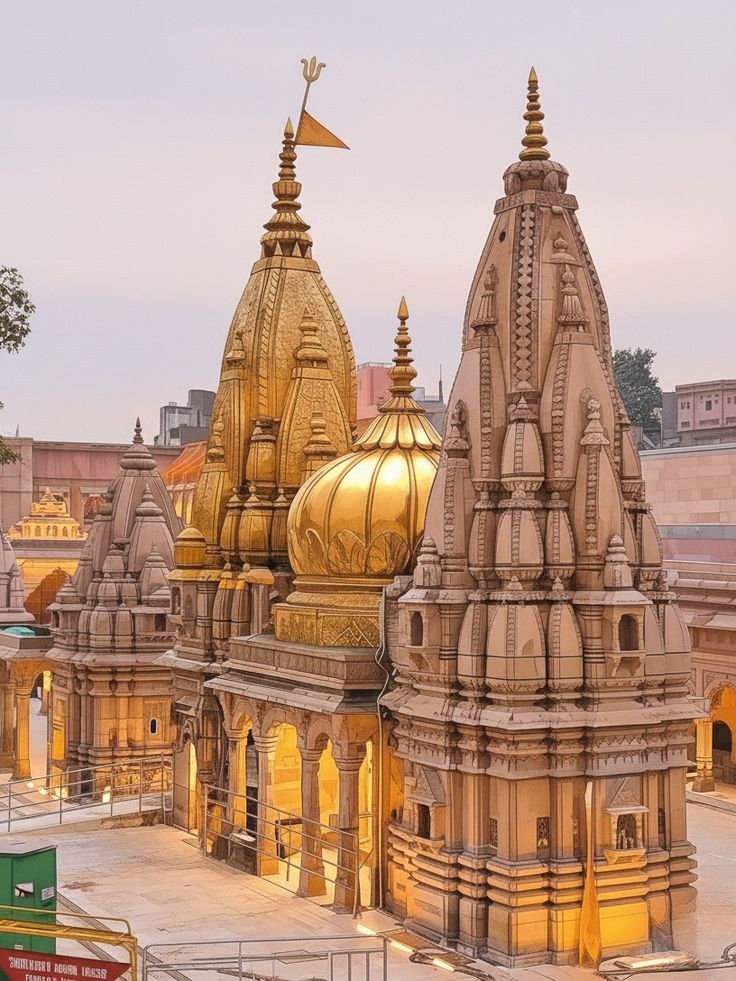
Kashi Vishwanath Jyotirlinga Temple
Kashi Vishwanath Jyotirlinga Temple in Varanasi, Uttar Pradesh — one of the twelve most sacred Shiva shrines in India, mentioned in the Shiva Purana.
About Kashi Vishwanath Jyotirlinga Temple
Located in the holy city of Varanasi on the banks of River Ganga. It is one of the most sacred temples in India and the center of faith for millions of Hindus worldwide.
Kashi Vishwanath Temple Mythology & Legend
Varanasi is considered the city of Lord Shiva. It is believed that those who die in Varanasi attain moksha (liberation). The Jyotirlinga represents Shiva's infinite presence and cosmic energy.
History of Kashi Vishwanath Temple
The temple has been destroyed and rebuilt multiple times throughout history. The current structure was built by Maharani Ahilyabai Holkar in 1780. The golden spire was donated by Maharaja Ranjit Singh.
Kashi Vishwanath Darshan Timings & Rituals
- Mangala Aarti at 3:00 AM
- Bhog Aarti at noon
- Sandhya Aarti in evening
- Shringar Aarti at night
- Shayan Aarti at closing
How to Reach Kashi Vishwanath — Stay, Food & Travel Guide
Hotels & Accommodation Near Kashi Vishwanath
- Hotels near Dashashwamedh Ghat
- Guest houses in old Varanasi
- Luxury hotels on Mall Road
- Ashrams and dharamshalas
Booking Tip: Visit platforms like MakeMyTrip, Booking.com, or Goibibo for online reservations.
Quick Information
Spiritual Significance of Kashi Vishwanath
Discover the ancient Vedic importance, Puranic legends, and astrological remedies associated with the sacred Kashi Vishwanath Jyotirlinga.
Associated Kaal Sarp Dosh
Karkotak Kaal Sarp Dosh
Visiting this Jyotirlinga is traditionally prescribed as a powerful remedy for those born under or afflicted by this specific Kaal Sarp Dosh.
Vedic Importance & Puranic Legends
The spiritual heart of Vedic India, standing on Shiva's trident separate from the physical constraints of Earth. Shiva chants the Taraka Mantra of liberation into the ears of the departing souls.
Why You Should Visit
Spiritual & Material Benefits
For Moksha (ultimate liberation from the wheel of rebirth) and absolute spiritual awakening. A dip in the holy Ganges followed by Darshan instantly dissolves layers of ego and negative past-life patterns.
The Complete Guide to Kashi Vishwanath Jyotirlinga
Everything a pilgrim needs — a millennium of history, the specifics of the sanctum's architecture, the exact darshan procedure, the annual festival calendar, and practical tips born from experience on the ground.
A Thousand Years of History
Kashi Vishwanath in Varanasi (ancient Kashi) is arguably the most spiritually charged of all twelve Jyotirlingas. The Skanda Purana and the Kashi Khand describe Kashi as resting on the trishul of Lord Shiva, separate from the physical earth. The city has been continuously inhabited for at least 3,000 years and was already a major religious centre in the time of the Buddha (6th century BCE). The current temple, however, is the seventh reconstruction: the original medieval structure was destroyed multiple times, most infamously by Aurangzeb in 1669 who built the Gyanvapi Mosque on the ruins. The present sanctum was rebuilt by Rani Ahilyabai Holkar of Indore in 1780; Maharaja Ranjit Singh of the Sikh empire donated 1,000 kg of gold in 1839 to plate the two shikharas — earning it the name 'Suvarna Mandir' (the golden temple of Kashi). The Kashi Vishwanath Corridor (Kashi Vishwanath Dham), a 5-lakh-square-foot redevelopment inaugurated on 13 December 2021, directly connects the temple to the Ganga at Lalita Ghat for the first time in centuries.
Architecture & Design of the Sanctum
The temple's twin shikharas are entirely plated in gold — a feature that catches the sun magnificently from the Ganga at dawn. The main sanctum is a compact square chamber housing a black stone lingam roughly 60 cm high, set in a silver altar. The Gyan Vapi ('well of wisdom') just outside the temple is believed to hold the original swayambhu lingam that was hidden by the temple priests during Aurangzeb's raid. The new corridor incorporates 24 buildings including the Yatri Suvidha Kendra, Vedic Kendra, Mumukshu Bhavan, and the Ghat plaza, all in traditional Kashi Nagara style with Chunar sandstone.
Step-by-Step Darshan Procedure
- 1Enter through Gate 4 of the Kashi Vishwanath Dham (KVD) on Godowlia road — free darshan queue.
- 2For faster access, purchase a Sugam Darshan ticket (Rs. 300) at the online portal shrikashivishwanath.org.
- 3Deposit footwear and mobile phones at the free cloakroom — even smartwatches are prohibited inside the sanctum.
- 4Take a purifying dip at the adjoining Manikarnika or Dashashwamedh Ghat before entering (optional but traditional).
- 5Offer bilva, dhatura, gangajal and milk to the lingam; touching the lingam is permitted only during the paid Sparsha Darshan.
- 6Exit via the Ghat gate and witness the world-famous Ganga Aarti at Dashashwamedh Ghat every evening.
Annual Festival Calendar
Maha Shivratri
Kashi comes alive with a Shobha Yatra of Shiva and Parvati as bride and groom, wending through the old city to the temple.
Dev Deepavali (Kartik Purnima)
The eighty-four ghats of Varanasi are illuminated by over a million diyas — a visual spectacle unique in the world.
Rangbhari Ekadashi
A colourful pre-Holi festival where the deity is anointed with gulal by the temple priests; the tradition is 350 years old.
Insider Tips for Pilgrims
- Free lockers are available at the KVD gates; do not use unauthorised private stalls in the surrounding lanes.
- The Mangala Aarti at 3:00 AM is the most auspicious slot — book at least a week in advance for Rs. 500.
- Combine the darshan with Sarnath (10 km) and the BHU campus for a full spiritual-cultural day.
Essentials for Your Kashi Vishwanath Yatra
Curated puja items, spiritual books, and travel essentials for pilgrims visiting Kashi Vishwanath and other sacred Jyotirlinga temples. Delivered by Amazon India.
Rudraksha Mala
Original 108-bead prayer mala for daily japa
Puja Thali Set
Complete brass puja thali with all accessories
Shiva Purana
Sacred scripture of Lord Shiva in English
Brass Diya & Lamp
Traditional oil lamp for temple worship
Meditation Cushion
Zafu cushion for meditation & chanting
Pilgrimage Backpack
Durable 40L travel backpack for temple visits
Ethnic Wear
Traditional kurta, saree & salwar for pilgrims
Shiv Idols
Brass, marble & panchdhatu Shiva idols for puja
As an Amazon Associate, we earn from qualifying purchases — at no extra cost to you. Prices, availability, and product details are managed by Amazon.in.
Book Your Stay Near Kashi Vishwanath
Plan your pilgrimage to Kashi Vishwanath with our trusted hotel and travel partners. Compare deals and book directly with verified providers.
IndiGo Hotels
Premium hotel deals across India
Cleartrip
Flights, hotels & holiday packages
Booking.com
Worldwide hotels & accommodation
Agoda
Hotels & resorts at best prices
Disclosure: We may earn an affiliate commission when you book through these partners — at no extra cost to you. This helps us keep the Jyotirlinga guide free.
Kashi Vishwanath Jyotirlinga — Your Questions Answered
Practical, spiritual and travel questions asked most often by first-time pilgrims to Kashi Vishwanath.
What Pilgrims Say About Kashi Vishwanath
Be the first to share your darshan experience.
Explore Other Sacred Jyotirlingas
Continue your spiritual journey across India by visiting the other sacred Jyotirlinga shrines of Lord Shiva.