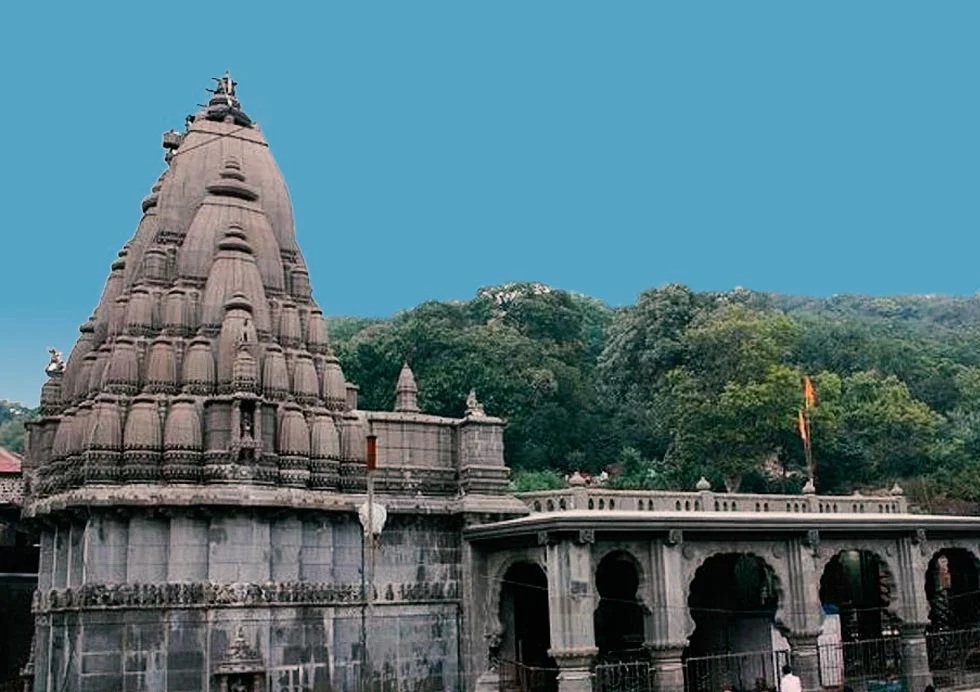
Bhimashankar Jyotirlinga Temple
Bhimashankar Jyotirlinga Temple in Pune, Maharashtra — one of the twelve most sacred Shiva shrines in India, mentioned in the Shiva Purana.
About Bhimashankar Jyotirlinga Temple
Located in the Sahyadri hills of Maharashtra, the temple is surrounded by dense forests and is the source of the Bhima river. The region is also a wildlife sanctuary.
Bhimashankar Temple Mythology & Legend
A demon named Bhima tormented the people and claimed to be the son of Shiva. Lord Shiva appeared and defeated him. Upon Bhima's repentance, Shiva gave him a place in his name and established himself as Bhimashankar.
History of Bhimashankar Temple
The temple was constructed during the 13th century under the Maratha Empire. Nana Phadnavis, an influential minister during the Peshwa period, made significant contributions to the temple's development.
Bhimashankar Darshan Timings & Rituals
- Daily abhishekam
- Maha Aarti in morning and evening
- Rudrabhishek on Mondays and Pradosh
- Shravan month special pujas
How to Reach Bhimashankar — Stay, Food & Travel Guide
Hotels & Accommodation Near Bhimashankar
- Temple trust guest house
- Maharashtra Tourism Resort
- Private lodges near temple
- Homestays in nearby villages
Booking Tip: Visit platforms like MakeMyTrip, Booking.com, or Goibibo for online reservations.
Quick Information
Spiritual Significance of Bhimashankar
Discover the ancient Vedic importance, Puranic legends, and astrological remedies associated with the sacred Bhimashankar Jyotirlinga.
Associated Kaal Sarp Dosh
Takshak Kaal Sarp Dosh
Visiting this Jyotirlinga is traditionally prescribed as a powerful remedy for those born under or afflicted by this specific Kaal Sarp Dosh.
Vedic Importance & Puranic Legends
Shiva manifested in his fierce Tandava form to eliminate the tyrant demon Bhima (son of Kumbhakarna). The sweat from Shiva's immense rage and exertion formed the origin of the Bhima River.
Why You Should Visit
Spiritual & Material Benefits
To gain immense physical strength, courage, and protection from hidden enemies, legal harassment, or severe anxiety due to external threats. It infuses a fearless energy.
The Complete Guide to Bhimashankar Jyotirlinga
Everything a pilgrim needs — a millennium of history, the specifics of the sanctum's architecture, the exact darshan procedure, the annual festival calendar, and practical tips born from experience on the ground.
A Thousand Years of History
Bhimashankar is nestled in the dense Sahyadri forests of the Western Ghats, about 110 km from Pune. The Shiva Purana narrates that Kumbhakarna's son, the demon Bhima, discovered his father's death and vowed revenge upon Vishnu; his tyranny grew so extreme that the devas approached Shiva for help. Shiva emerged from the earth in his fierce Tandava form, reduced the demon to ashes, and — at the request of the sages — remained on the spot as the Bhimashankar Jyotirlinga. The sweat that streamed off Shiva's body after the battle is said to have become the Bhima river, which originates a short distance from the temple. Colonial records document that the present temple structure was built in the mid-eighteenth century by Nana Phadnavis, a leading Maratha statesman under the Peshwas. The unique Nagara-Hemadpanti hybrid architecture of the temple has been preserved without significant alteration since then.
Architecture & Design of the Sanctum
The temple is a compact Nagara-style shrine set at ground level, with a black basalt shikhara that is deliberately kept low so as not to disturb the surrounding forest canopy. Interior pillars in the mandapa feature the Ashtavinayaka, the Dasavataras, and the Navagraha, all in mid-eighteenth century Peshwa relief. A rare 5-tonne bell donated by Chimaji Appa after the recapture of Vasai Fort from the Portuguese in 1739 hangs in front of the temple — one of the largest medieval bells in Maharashtra. The lingam here is a large, well-formed self-manifested rock, worshipped in a broad silver yoni-peetha.
Step-by-Step Darshan Procedure
- 1Descend 200-odd stone steps from the parking area to the temple courtyard — the path is shaded by ancient banyan trees.
- 2Deposit footwear at the free stand near the temple gate.
- 3Purchase bilva leaves, coconut and abhishek water from the licensed shops on the path.
- 4Perform pradakshina and offer the abhishek at the sanctum — direct touch of the lingam is not permitted.
- 5Ring the historic Chimaji Appa bell before exiting.
- 6Trek 20 minutes down to the Bhima river origin (Gupt Bhima) for a quiet meditation break.
Annual Festival Calendar
Maha Shivratri
A three-day fair transforms the tranquil forest into a bustling pilgrimage centre with an all-night Rudrabhishek.
Kartik Purnima
Devotees offer thousands of oil lamps along the ghat road; the fireflies of the surrounding forest add a natural spectacle.
Guru Purnima
Ashram-style bhajans are held at the adjoining Kaushik Ashram and the temple sees a strong turnout from Nath-panth sadhus.
Insider Tips for Pilgrims
- Bhimashankar is inside a wildlife sanctuary — the endemic Malabar Giant Squirrel is often spotted on the descent to the temple.
- Monsoon (July-September) is beautiful but leech-prone and often foggy; carry salt and rainproof footwear.
- The last MSRTC bus back to Pune departs by 5:00 PM — check timings if you plan a same-day return.
Essentials for Your Bhimashankar Yatra
Curated puja items, spiritual books, and travel essentials for pilgrims visiting Bhimashankar and other sacred Jyotirlinga temples. Delivered by Amazon India.
Rudraksha Mala
Original 108-bead prayer mala for daily japa
Puja Thali Set
Complete brass puja thali with all accessories
Shiva Purana
Sacred scripture of Lord Shiva in English
Brass Diya & Lamp
Traditional oil lamp for temple worship
Meditation Cushion
Zafu cushion for meditation & chanting
Pilgrimage Backpack
Durable 40L travel backpack for temple visits
Ethnic Wear
Traditional kurta, saree & salwar for pilgrims
Shiv Idols
Brass, marble & panchdhatu Shiva idols for puja
As an Amazon Associate, we earn from qualifying purchases — at no extra cost to you. Prices, availability, and product details are managed by Amazon.in.
Book Your Stay Near Bhimashankar
Plan your pilgrimage to Bhimashankar with our trusted hotel and travel partners. Compare deals and book directly with verified providers.
IndiGo Hotels
Premium hotel deals across India
Cleartrip
Flights, hotels & holiday packages
Booking.com
Worldwide hotels & accommodation
Agoda
Hotels & resorts at best prices
Disclosure: We may earn an affiliate commission when you book through these partners — at no extra cost to you. This helps us keep the Jyotirlinga guide free.
Bhimashankar Jyotirlinga — Your Questions Answered
Practical, spiritual and travel questions asked most often by first-time pilgrims to Bhimashankar.
What Pilgrims Say About Bhimashankar
Be the first to share your darshan experience.
Explore Other Sacred Jyotirlingas
Continue your spiritual journey across India by visiting the other sacred Jyotirlinga shrines of Lord Shiva.