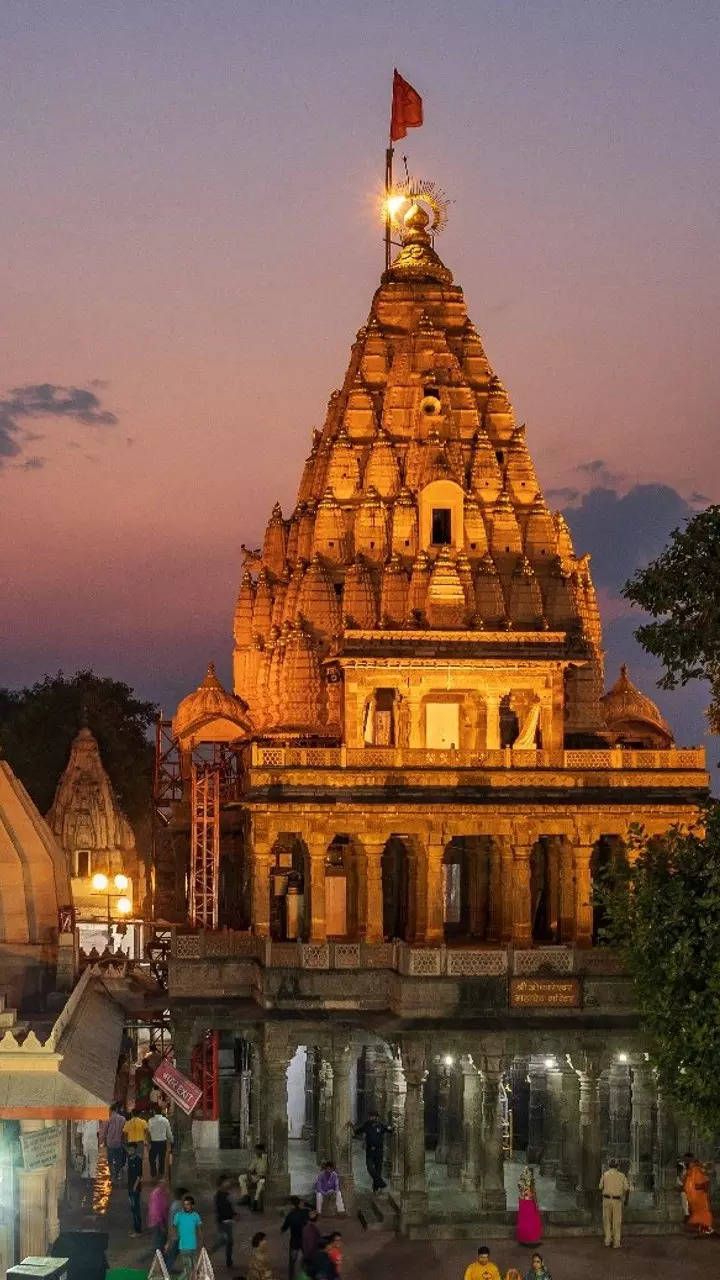
Mahakaleshwar Jyotirlinga Temple
Mahakaleshwar Jyotirlinga Temple in Ujjain, Madhya Pradesh — one of the twelve most sacred Shiva shrines in India, mentioned in the Shiva Purana.
About Mahakaleshwar Jyotirlinga Temple
Located in the ancient city of Ujjain in Madhya Pradesh. The temple is one of the most revered Jyotirlingas and is known for its Bhasma Aarti performed with sacred ash at dawn.
Mahakaleshwar Temple Mythology & Legend
Legend tells of a demon named Dushana who terrorized the city. Lord Shiva appeared as Mahakaleshwar and vanquished the demon, then resided there as a Jyotirlinga to protect the city.
History of Mahakaleshwar Temple
The temple is mentioned in ancient texts and was renovated by the Maratha ruler Ranoji Shinde in the 18th century. The present structure showcases Maratha, Bhumija, and Chalukya architectural styles.
Mahakaleshwar Darshan Timings & Rituals
- Famous Bhasma Aarti at 4:00 AM (advance booking required)
- Sawari procession on Mondays
- Daily abhishekam ceremonies
- Maha Shivaratri grand celebrations
How to Reach Mahakaleshwar — Stay, Food & Travel Guide
Hotels & Accommodation Near Mahakaleshwar
- Mahakal Temple Trust Dharamshala
- Hotel Shri Mahakaal
- Hotel Shipra Residency
- MP Tourism hotels
Booking Tip: Visit platforms like MakeMyTrip, Booking.com, or Goibibo for online reservations.
Quick Information
Spiritual Significance of Mahakaleshwar
Discover the ancient Vedic importance, Puranic legends, and astrological remedies associated with the sacred Mahakaleshwar Jyotirlinga.
Associated Kaal Sarp Dosh
Vasuki Kaal Sarp Dosh
Visiting this Jyotirlinga is traditionally prescribed as a powerful remedy for those born under or afflicted by this specific Kaal Sarp Dosh.
Vedic Importance & Puranic Legends
Located at the ancient prime meridian of India, Shiva manifested as Mahakal (Lord of Time & Death) to destroy the demon Dushana. It is the only South-facing (Dakshinamurthi) Jyotirlinga.
Why You Should Visit
Spiritual & Material Benefits
To conquer the fear of death, severe chronic illnesses, and catastrophic planetary alignments (Saturn/Rahu afflictions). The sacred Bhasma Aarti burns away deep-seated karmic debts.
The Complete Guide to Mahakaleshwar Jyotirlinga
Everything a pilgrim needs — a millennium of history, the specifics of the sanctum's architecture, the exact darshan procedure, the annual festival calendar, and practical tips born from experience on the ground.
A Thousand Years of History
Mahakaleshwar in Ujjain is the only south-facing (Dakshinamurthi) Jyotirlinga among the twelve, a distinction that gives it exceptional tantric significance. Ujjain — historically known as Ujjayini — was the prime meridian of ancient Hindu astronomy, and the Mahakaleshwar shrine sits precisely on the traditional Tropic of Cancer marker. The temple is mentioned in the Puranas, in Kalidasa's Meghaduta (c. 4th century CE), and in the writings of the 6th-century astronomer Varahamihira who lived in Ujjain. The lingam housed in the sanctum is one of the very few 'swayambhu' (self-manifested) lingams and is worshipped with the unique Bhasma Aarti, in which sacred ash from cremation grounds is applied to the deity before sunrise. Sultan Iltutmish plundered the shrine in 1234 CE, but the Maratha Peshwa Baji Rao I and later the Scindia dynasty of Gwalior rebuilt the present three-tiered structure between 1730 and 1750. The five-storeyed temple with its lower sanctum lying below ground level was designed to withstand both natural erosion and repeated invasions.
Architecture & Design of the Sanctum
The temple is built in the Bhumija style of central Indian architecture with a shikhara clustered by miniature turrets (urushringas). Uniquely, the sanctum is located in the basement level (Nagachandreshwar shrine is on the topmost floor and opens only on Naga Panchami), a vertical layout representing the tri-loka cosmology. The main shikhara rises 118 feet and is now enclosed within a modern corridor complex (Mahakal Lok) inaugurated in 2022 that features 108 sandstone pillars and 200 murals depicting the Shiva Purana.
Step-by-Step Darshan Procedure
- 1Enter through Gate 4 of the new Mahakal Lok corridor — the queue is fully covered and air-cooled.
- 2For Bhasma Aarti (4:00 AM), pre-book online at shrimahakaleshwar.com at least a week in advance.
- 3Deposit belongings at the free Yatri Suvidha Kendra near Gate 4 before proceeding to security.
- 4Offer bilva leaves and the traditional 'panchamrit' (milk, curd, ghee, honey, sugar) at the abhishek counter.
- 5Complete pradakshina of the underground sanctum and visit the Nagachandreshwar temple on the third floor (accessible only on Naga Panchami).
- 6Exit via the Rudra Sagar lake promenade for a view of the illuminated corridor.
Annual Festival Calendar
Bhasma Aarti (daily)
The pre-dawn 4:00 AM aarti with sacred ash is unique to Mahakaleshwar and is considered the single most auspicious ritual in Shaivite worship.
Maha Shivratri
A nine-day 'Shiv Navratri' culminates in the Shahi Sawari — a royal procession where Mahakal is carried through Ujjain on a silver palanquin.
Simhastha Kumbh Mela
Held every twelve years on the banks of the Kshipra river; the next Simhastha is scheduled for 2028.
Insider Tips for Pilgrims
- Bhasma Aarti passes are limited to 500 per day — book strictly through the official government portal.
- Male devotees traditionally wear only a dhoti (no upper garment) during Bhasma Aarti; women wear a saree.
- Try the Ujjaini poha and kachori at the shops near Ramghat after morning darshan.
Essentials for Your Mahakaleshwar Yatra
Curated puja items, spiritual books, and travel essentials for pilgrims visiting Mahakaleshwar and other sacred Jyotirlinga temples. Delivered by Amazon India.
Rudraksha Mala
Original 108-bead prayer mala for daily japa
Puja Thali Set
Complete brass puja thali with all accessories
Shiva Purana
Sacred scripture of Lord Shiva in English
Brass Diya & Lamp
Traditional oil lamp for temple worship
Meditation Cushion
Zafu cushion for meditation & chanting
Pilgrimage Backpack
Durable 40L travel backpack for temple visits
Ethnic Wear
Traditional kurta, saree & salwar for pilgrims
Shiv Idols
Brass, marble & panchdhatu Shiva idols for puja
As an Amazon Associate, we earn from qualifying purchases — at no extra cost to you. Prices, availability, and product details are managed by Amazon.in.
Book Your Stay Near Mahakaleshwar
Plan your pilgrimage to Mahakaleshwar with our trusted hotel and travel partners. Compare deals and book directly with verified providers.
IndiGo Hotels
Premium hotel deals across India
Cleartrip
Flights, hotels & holiday packages
Booking.com
Worldwide hotels & accommodation
Agoda
Hotels & resorts at best prices
Disclosure: We may earn an affiliate commission when you book through these partners — at no extra cost to you. This helps us keep the Jyotirlinga guide free.
Mahakaleshwar Jyotirlinga — Your Questions Answered
Practical, spiritual and travel questions asked most often by first-time pilgrims to Mahakaleshwar.
What Pilgrims Say About Mahakaleshwar
Be the first to share your darshan experience.
Explore Other Sacred Jyotirlingas
Continue your spiritual journey across India by visiting the other sacred Jyotirlinga shrines of Lord Shiva.