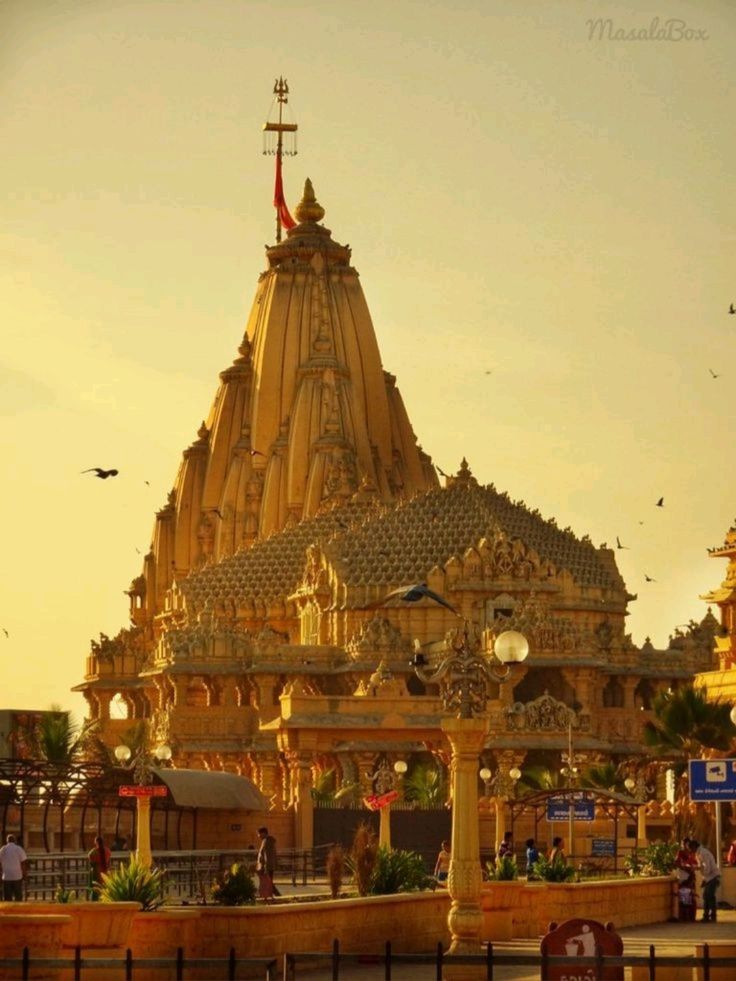
Somnath Jyotirlinga Temple
Somnath Jyotirlinga Temple in Prabhas Patan, Veraval, Gujarat — one of the twelve most sacred Shiva shrines in India, mentioned in the Shiva Purana.
About Somnath Jyotirlinga Temple
The first among the twelve Jyotirlinga shrines of Shiva, located in Prabhas Patan near Veraval in Saurashtra. The temple has been destroyed and rebuilt several times throughout history.
Somnath Temple Mythology & Legend
Legend says that the Moon God (Chandra) was cursed by his father-in-law Daksha that he would wane. The Moon prayed to Lord Shiva, who appeared in the form of a Jyotirlinga and blessed him that he would wax and wane periodically.
History of Somnath Temple
The temple has a legendary history dating back to ancient times. It was destroyed by Mahmud of Ghazni in 1026 and rebuilt multiple times. The current structure was reconstructed in Chaulukya style of Hindu temple architecture.
Somnath Darshan Timings & Rituals
- Morning Aarti at 7:00 AM
- Rudrabhishek every Monday
- Evening Aarti at 7:00 PM
- Maha Shivaratri special puja
How to Reach Somnath — Stay, Food & Travel Guide
Hotels & Accommodation Near Somnath
- Somnath Trust Guest House
- Hotel Somnath Sagar
- Shree Somnath Lodge
- Various dharamshalas near the temple
- Hotels in Veraval (6 km away)
Booking Tip: Visit platforms like MakeMyTrip, Booking.com, or Goibibo for online reservations.
Quick Information
Spiritual Significance of Somnath
Discover the ancient Vedic importance, Puranic legends, and astrological remedies associated with the sacred Somnath Jyotirlinga.
Associated Kaal Sarp Dosh
Anant Kaal Sarp Dosh
Visiting this Jyotirlinga is traditionally prescribed as a powerful remedy for those born under or afflicted by this specific Kaal Sarp Dosh.
Vedic Importance & Puranic Legends
Associated with the Moon God (Soma), who was cursed to decay by King Daksha. Soma performed intense penance here; Lord Shiva blessed him, curing his decay and establishing the cycles of the moon.
Why You Should Visit
Spiritual & Material Benefits
To heal from mental trauma, depression, anxiety, or a weak natal Moon. It represents ultimate resurrection—just as the temple was rebuilt many times, visiting revives dying fortunes and restores lost mental peace.
The Complete Guide to Somnath Jyotirlinga
Everything a pilgrim needs — a millennium of history, the specifics of the sanctum's architecture, the exact darshan procedure, the annual festival calendar, and practical tips born from experience on the ground.
A Thousand Years of History
The Somnath Jyotirlinga, standing at the edge of the Arabian Sea in Prabhas Patan (Veraval, Gujarat), is universally recognised as the first among the twelve Jyotirlingas. Puranic tradition holds that the original shrine was built of pure gold by the Moon God Chandra, later re-built in silver by the Sun God, in wood by Lord Krishna, and eventually in stone by King Bhimadeva of the Chalukya dynasty. Its recorded history, however, is a story of resilience: the temple was plundered and destroyed at least six times between 1024 CE (Mahmud of Ghazni's infamous raid) and the sixteenth century under Aurangzeb, and each time it was reconstructed by devotees, kings, and later by an independent India. The present sanctum, in the Chalukya style of the Kailash Mahameru Prasada, was consecrated on 11 May 1951 by then President Dr. Rajendra Prasad after a national restoration project initiated by Sardar Vallabhbhai Patel in 1947. The Baan Stambh (arrow pillar) on the seaward side famously indicates that there is no land in a straight line between Somnath and the South Pole.
Architecture & Design of the Sanctum
Built in the Māru-Gurjara (Chalukya-Solanki) architectural idiom, the seven-storied shikhara rises 155 feet above the sanctum and is crowned by a 27-foot flag mast that carries the flag which is changed thrice daily. The temple layout follows a classical tri-parted plan of garbhagriha (sanctum), antarala (vestibule) and sabha-mandapa (assembly hall), with intricately carved kirtimukha and gaja-thara friezes running around the plinth. The exterior stone lacework, kalasha finials, and the sea-facing eastern porch are considered among the finest revivals of medieval Gujarati temple art in the twentieth century.
Step-by-Step Darshan Procedure
- 1Enter through the eastern Digvijay Dwar after depositing mobile phones and leather items at the free cloakroom.
- 2Proceed through the security screening — no photography is permitted inside the sanctum precincts.
- 3Take a symbolic sip of Ganga jal or Prabhas kund water offered at the outer prakara.
- 4Move clockwise through the sabha-mandapa, keeping the deity on your right for the traditional pradakshina.
- 5Offer bilva leaves, white flowers, or Prasad purchased at the official counter — outside offerings are not accepted.
- 6Attend the Sandhya Aarti or the evening Light & Sound show (Jai Somnath) to complete the pilgrimage.
Annual Festival Calendar
Maha Shivratri
The night-long jaagran and abhishekam draw more than three lakh pilgrims; the temple remains open for continuous darshan.
Kartik Purnima
A grand fair is held on the beach; devotees take a ritual dip in the Triveni Sangam of the Hiranya, Kapila and Saraswati rivers.
Somnath Sthapana Divas
11 May is celebrated as the founding day of the reconstructed temple with special processions and cultural programmes.
Insider Tips for Pilgrims
- Dress code is traditional; shorts and sleeveless tops are discouraged inside the mandapa.
- Free darshan is always available; VIP passes are neither issued nor required.
- Combine the visit with Bhalka Tirtha (where Krishna left His mortal body) and Triveni Sangam, both within 3 km.
Essentials for Your Somnath Yatra
Curated puja items, spiritual books, and travel essentials for pilgrims visiting Somnath and other sacred Jyotirlinga temples. Delivered by Amazon India.
Rudraksha Mala
Original 108-bead prayer mala for daily japa
Puja Thali Set
Complete brass puja thali with all accessories
Shiva Purana
Sacred scripture of Lord Shiva in English
Brass Diya & Lamp
Traditional oil lamp for temple worship
Meditation Cushion
Zafu cushion for meditation & chanting
Pilgrimage Backpack
Durable 40L travel backpack for temple visits
Ethnic Wear
Traditional kurta, saree & salwar for pilgrims
Shiv Idols
Brass, marble & panchdhatu Shiva idols for puja
As an Amazon Associate, we earn from qualifying purchases — at no extra cost to you. Prices, availability, and product details are managed by Amazon.in.
Book Your Stay Near Somnath
Plan your pilgrimage to Somnath with our trusted hotel and travel partners. Compare deals and book directly with verified providers.
IndiGo Hotels
Premium hotel deals across India
Cleartrip
Flights, hotels & holiday packages
Booking.com
Worldwide hotels & accommodation
Agoda
Hotels & resorts at best prices
Disclosure: We may earn an affiliate commission when you book through these partners — at no extra cost to you. This helps us keep the Jyotirlinga guide free.
Somnath Jyotirlinga — Your Questions Answered
Practical, spiritual and travel questions asked most often by first-time pilgrims to Somnath.
What Pilgrims Say About Somnath
Be the first to share your darshan experience.
Explore Other Sacred Jyotirlingas
Continue your spiritual journey across India by visiting the other sacred Jyotirlinga shrines of Lord Shiva.